Tian Deng
I'm a developer and a former video/text editor, journalist (Contributed to 2 books), broadcast show editor and lawyer. I'm currently a Master of IT student at Monash University. Previously, I hope to help people live better lives. News, short videos, social media, law, coding... Now I'm a problem solving driven developer and exploring my favorite methods step by step.
Would you like to hear my story?

Changelog from my journey
I was working as a non-technology person for a very long time, and everything changes from that magic day! Here's a timeline of my journey.
15 Feb 2023
15 Feb 2023
Automation / Userscript
Monthly Douyin account reporting 
Built a browser userscript with JavaScript to automate month-end workload reporting for 1,000+ Douyin videos, replacing a fragile manual process of opening videos one by one, identifying ownership, and recording views and engagement. It cut reporting time by 98%, from several hours to around 10 minutes, helped teammates and managers share data more easily, and became the first project that made programming feel useful to real people.
May-Jun 2025
May-Jun 2025
Cloud / Serverless / Backend
BirdTag serverless media storage system
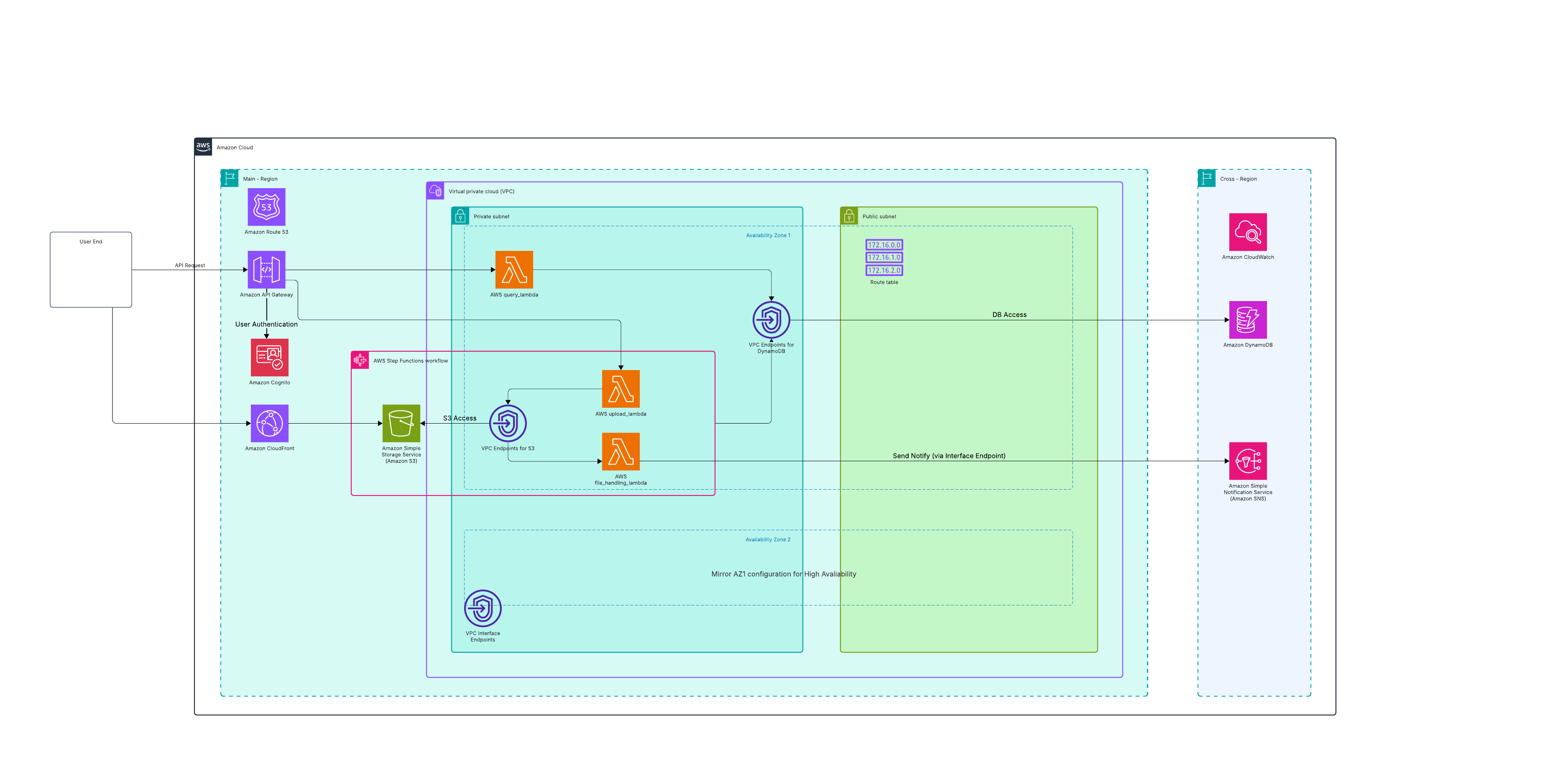
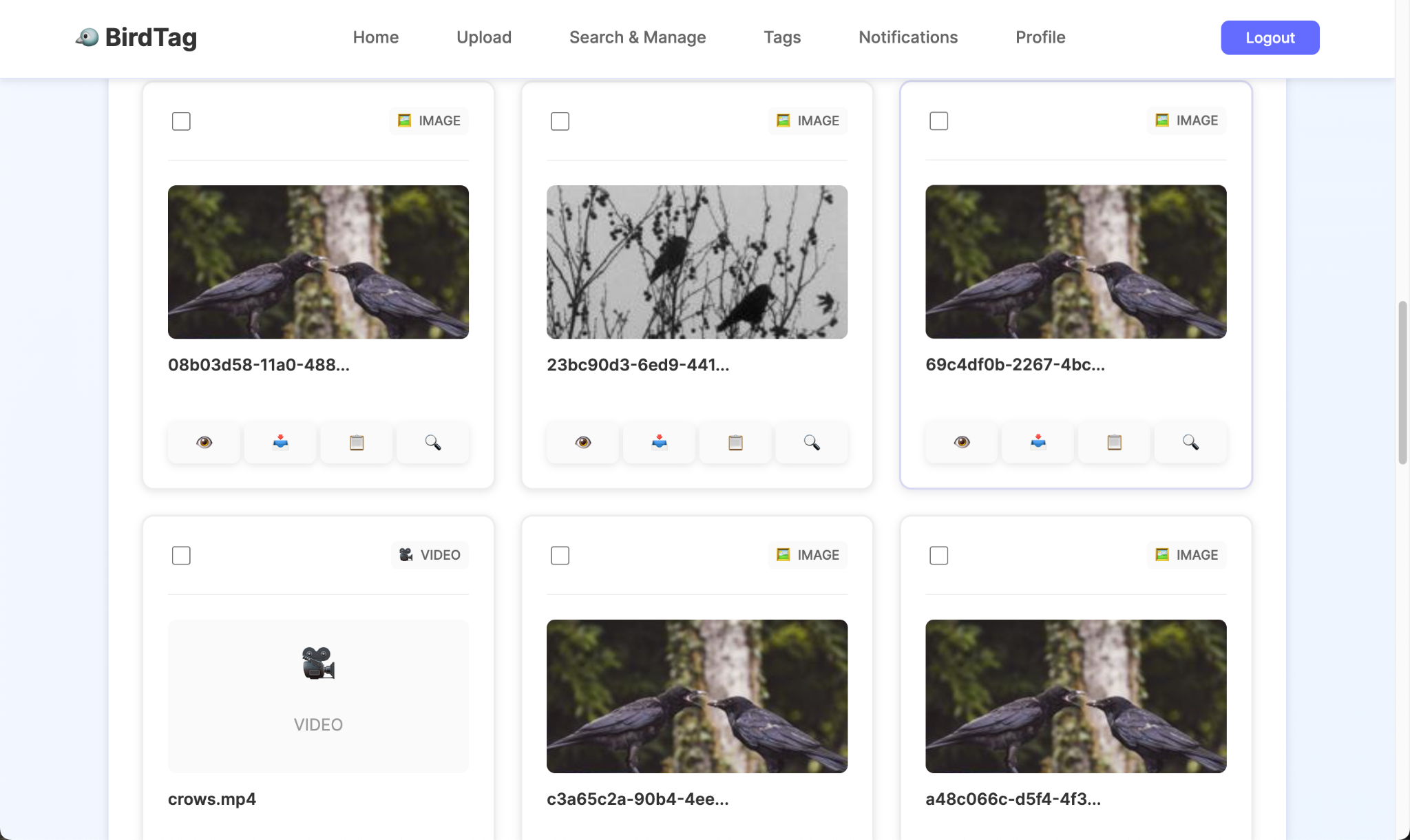
Built the backend architecture and query layer for BirdTag, solving the pain point that bird media across images, audio, and videos is hard to organize, tag, and search manually. The project's new angle was an AWS serverless media storage system that accepts multi-format uploads, automatically tags detected species, and lets users search files by bird tags and counts. I drafted the initial cloud architecture and implemented query-related APIs using API Gateway, AWS Lambda, DynamoDB, S3, Cognito, and Swagger/OpenAPI. To handle real cloud constraints, I packaged heavy Python model dependencies into a Docker image, deployed it through ECR, used async Lambda invocationto work around API Gateway's 30-second timeout, and used S3 pre-signed URLs to avoid upload payload limits. The project helped me move from building small scripts to designing backend systems with cloud architecture, security, and operational tradeoffs.
Sep-Oct 2025
Sep-Oct 2025
Android / Mobile / Firebase
Women Safety Android app
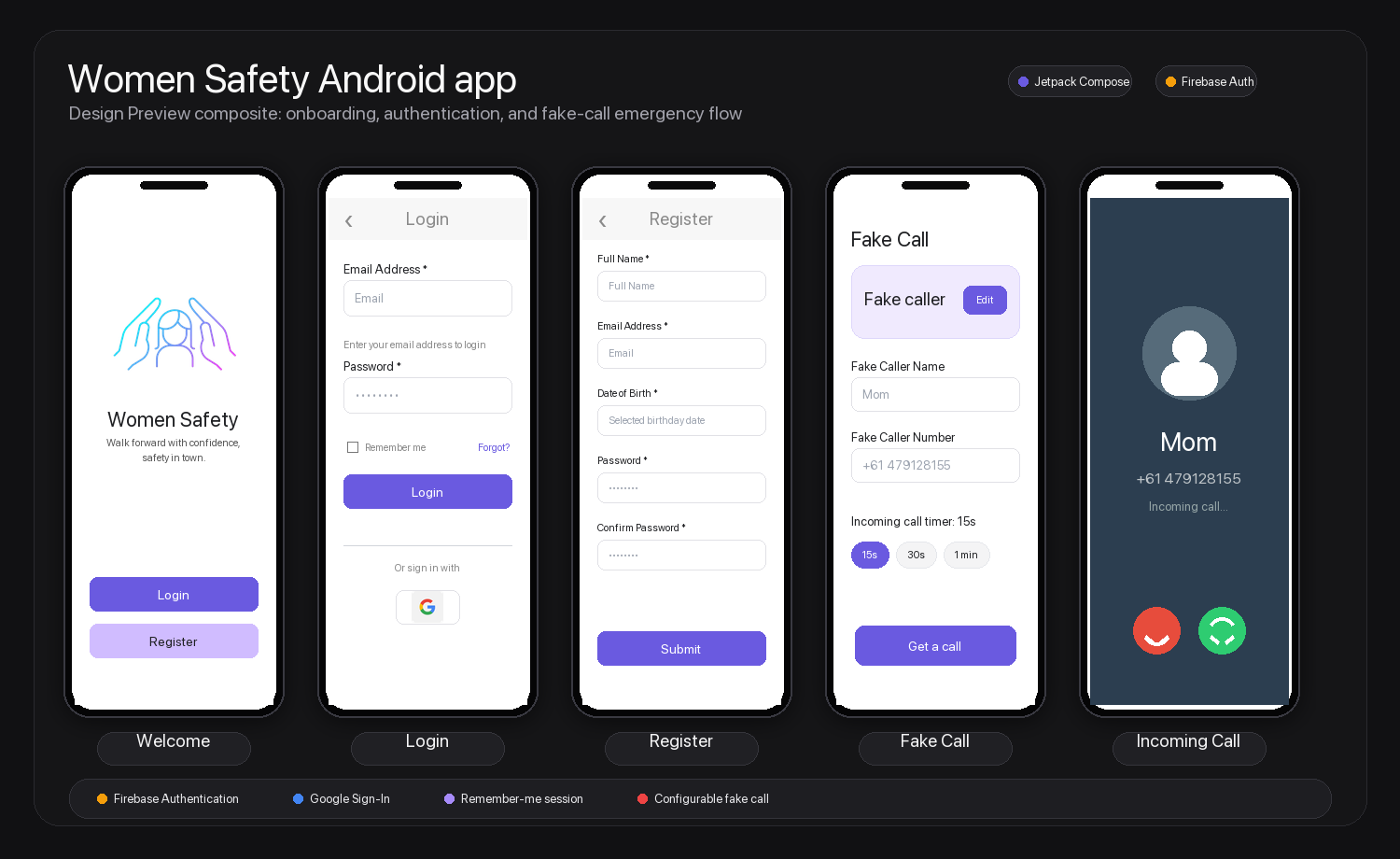
Contributed to a team-built women's safety Android app for the pain point that emergency tools are often scattered across apps or too obvious to use in uncomfortable situations. The project's new angle was combining emergency contacts, location sharing, safety tips, fake-call diversion, and profile management in one mobile workflow. I focused on the onboarding and emergency-interaction flow, building Jetpack Compose login and registration screens, form validation, Firebase Authentication, Firestore user profiles, Google Sign-In, remember-me session handling, and a configurable fake call feature with notification and incoming-call UI. This project helped me move from web and cloud work into mobile development, where I had to handle Android permissions, navigation state, background behavior, and user-facing safety workflows in a real multi-feature app.
Aug-Oct 2025
Aug-Oct 2025
Web App / Firebase / GenAI
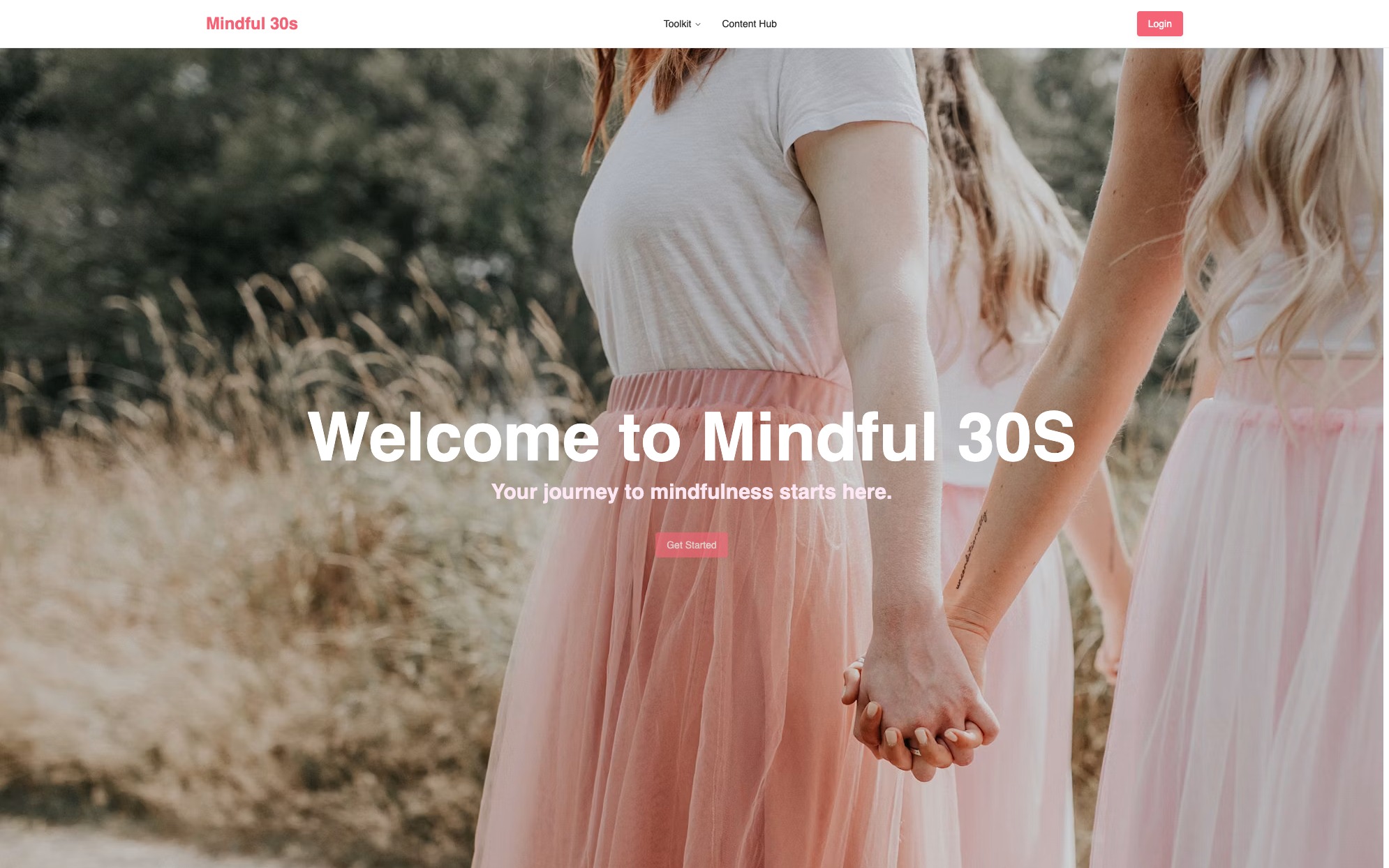
Mindful 30S wellbeing support platform
Built Mindful 30S, a deployed Vue 3 and Firebasewellbeing platform for people who need mental-health, lifestyle, and local support resources but often have to switch between separate tools for reading advice, tracking their state, finding nearby clinics, and managing follow-up. The project's new angle was combining a content hub, wellness check-ins, Gemini AI insights, nearby clinic search with Google Maps, role-based admin tools, interactive dashboard charts, CSV export, and SendGrid bulk email into one workflow. I implemented authentication, Firestore-backed user/content management, Cloud Functions, admin-only operations, AI-generated article tags and wellness suggestions, accessibility improvements, and cloud deployment.
Oct-Nov 2025
Oct-Nov 2025
Spatial Database / PostGIS / Data Visualization
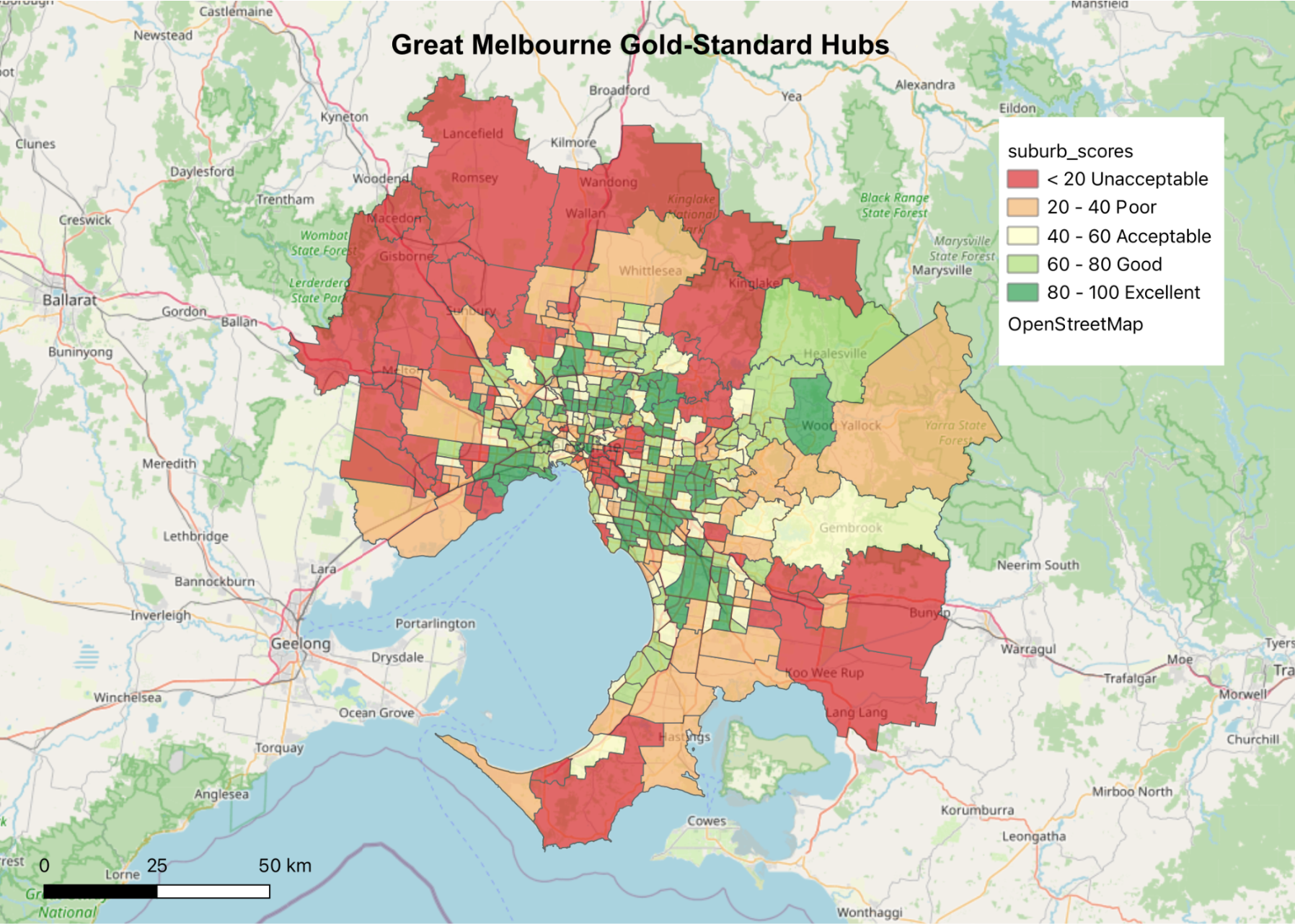
Melbourne PTV bus blind-spot analysis
Built a geospatial data analysis project to test whether Melbourne's bus network actually supports practical commuting from residential areas to industrial job zones. I restored and modeled large PTV GTFS and ABS ASGS mesh-block datasets in PostgreSQL / PostGIS, including 8.1M+ stop-time records, 9.7M+ shape points, 236k+ trips, and 368k+ mesh blocks. Instead of treating stop coverage as the answer, I built a commuter-centric coverage paradox model across 376 Greater Melbourne bus routes, separating the 208 routes that could connect residential and industrial areas from 168 routes that could not. I then created indexed spatial layers, nearest-stop distance calculations, service-intensity views, route-choice metrics, normalized rankings, and QGIS composite suburb scores, revealing that 279 suburbs had under 0.5% direct industrial accessibility and 47 suburbs had no direct access. The project earned 91.2/100 and shows how I turn raw transport data into spatial evidence for planning decisions.
Feb 2026-present
Feb 2026-present
React Native / Expo / Supabase
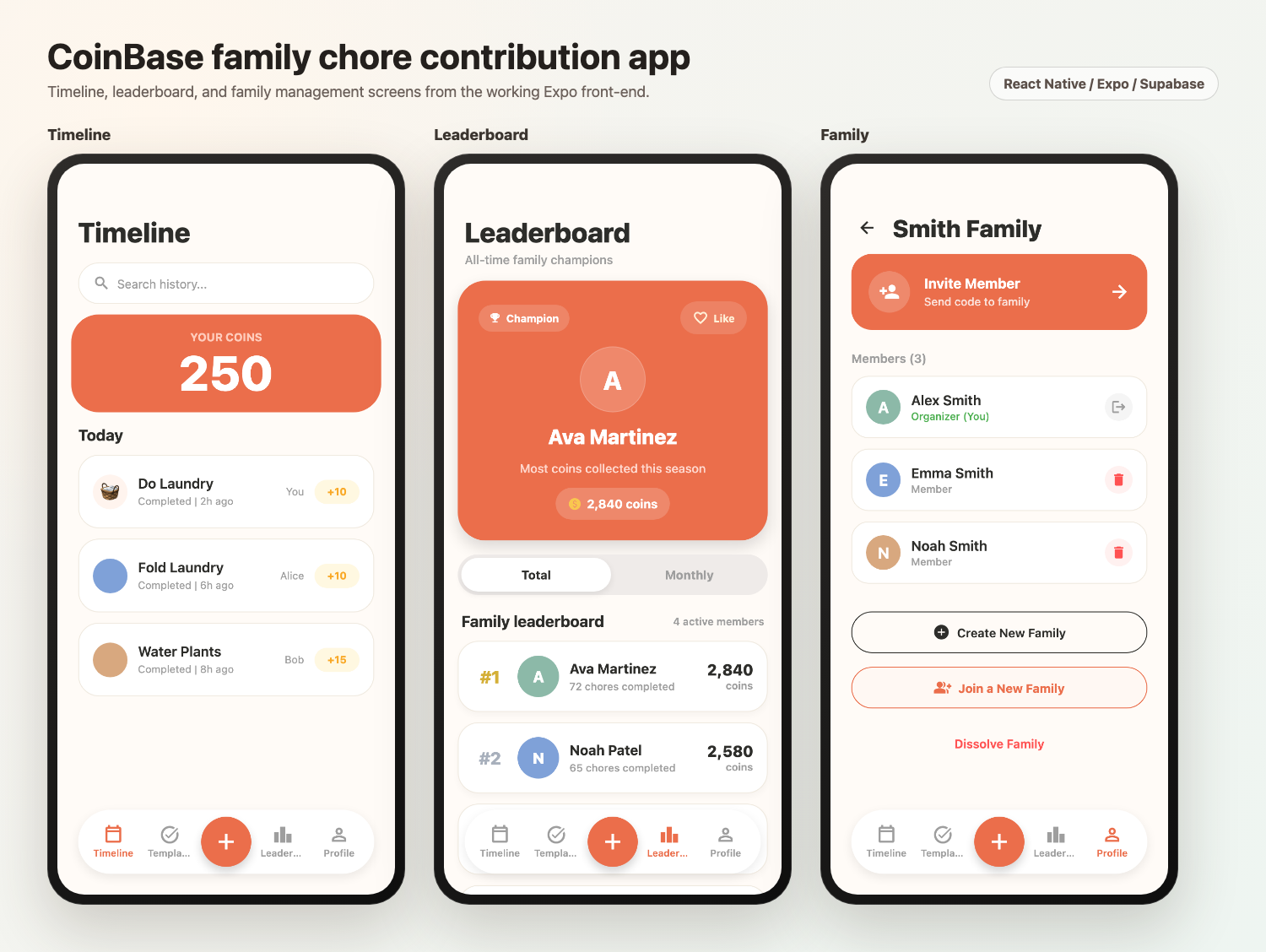
CoinBase family chore contribution app
Building CoinBase, a family chore contribution app that visualizes household work so every member's effort can be seen instead of becoming invisible labor that causes arguments. Its novelty is turning chores into a shared coin-based contribution record: family members can create reusable task templates, log completed work into a timeline, attach rewards and emojis, compare monthly / total contributions on a leaderboard, and manage family membership through invite flows. I have completed the React Native / Expo front-end with TypeScript, Expo Router, NativeWind, timeline search/edit/delete, task-template management, profile/family flows, and Supabase Auth screens, and I am now connecting the app to a Supabase / PostgreSQL backend with RLS, family/task/event schemas, invitations, soft deletes, and sync metadata.
Feb 2026-present
Feb 2026-present
AI / Desktop App / Speech-to-text
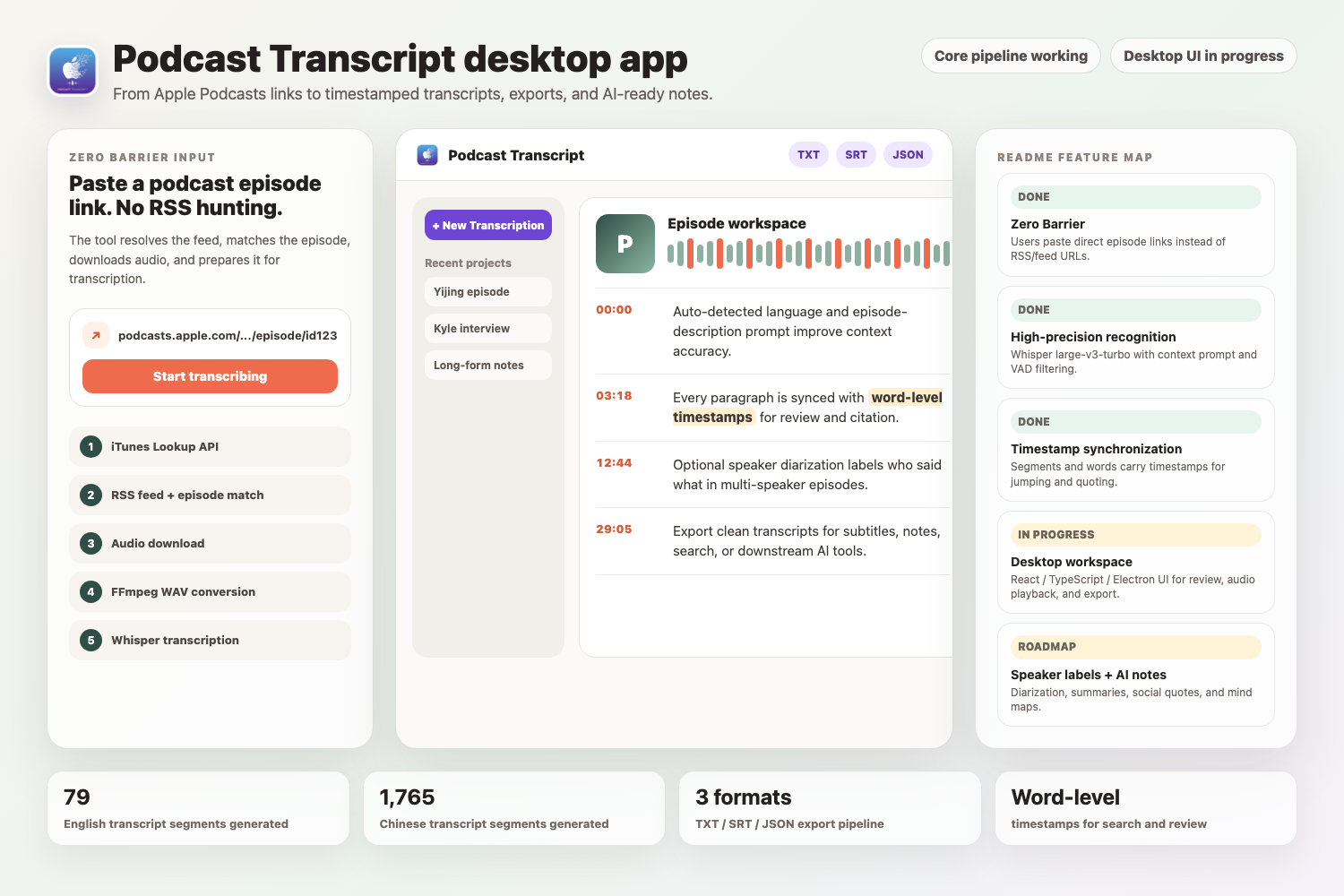
Podcast Transcript desktop app
Building Podcast Transcript, an ongoing desktop transcription app for people who want to turn long podcasts into searchable notes without wrestling with RSS feeds, audio files, or manual timestamping. Its novelty is a zero-barrier podcast-to-text workflow: paste an Apple Podcasts episode link, automatically resolve the feed through the iTunes Lookup API, match the episode, download the audio, convert it with FFmpeg, and transcribe it with faster-whisper / Whisper large-v3-turbo. I built the Python pipeline with episode-description prompting to improve context accuracy, word-level timestamps, TXT / SRT / JSON export, and optional pyannote speaker diarization, and I am turning it into a React / TypeScript / Electron desktop app with a sidebar, transcript workspace, audio playback, export flow, and future AI tools for summaries, quotes, and mind maps.
From Media Practice to Data-Driven Research
Minor thesis, Monash University | July 2025 to May 2026 | Supervised by Dr.Charlotte Pierce and Prof Andrew Cain
Running across two semesters, this minor thesis became the clearest bridge between my earlier media work and my current IT training. It gave me a way to translate practical content intuition into a structured research workflow: used the YouTube Data API for metadata collection, FFmpeg and Whisper for audio-to-text processing, NLP-basedsentiment scoring, Dale-Chall readability analysis, and Google's Universal Video Quality (UVQ) model to estimate no-reference perceptual video quality scores.
I analysed successful educational YouTube channels to ask whether high-engagement asynchronous learning videos follow a universal design template, or whether success depends on baseline quality plus context-specific tactics.
Research methods and transferable skills
Data scale
978,870candidate videos
collected and pruned from the top 100 educational YouTube channels.
Source frame
100educational channels
used as the initial sampling frame for high-visibility platform practice.
Validated corpus
35verified English channels
retained after metadata, transcript, audio, and manual language checks.
Feature engineering
30sopening hook window
used for transcript, language, and sentiment feature extraction.
Research analysis
2,912analysed videos
compared across engagement, script, delivery, peak, and quality signals.